A portable programme
Studio and home sessions follow the same block and update one record.
THE GROWTH ARCHITECT · TNGL 2026
Valhalla’s coaching expertise, delivered through Ensemble’s neighbourhood studios. One training record across studio and home. Explore the programme and its economics.
Case proposal · All prices, operating inputs and forecasts are illustrative planning assumptions.
53,000 distinct paid subscriptions.
Recurring revenue annualised at month 36.
Recurring memberships only. Contribution is before acquisition and central overhead.
01 / THE SERVICE
A 12-week strength-and-recovery programme that continues across studio, home and travel weeks.
Concept demo. Alternatives use existing entitlements; no extra unlimited sessions.
Studio and home sessions follow the same block and update one record.
Valhalla certifies local coaches and runs scheduled technique and quality reviews. Delivery costs include this support.
Offer a qualified slot, approved home session or eligible make-up. Apply service credits when promised access fails.
Set goals, starting level and regular sessions with a local coach.
Adjust the block using attendance, technique and performance measures.
Review progress and agree the next block before renewal.
Ensemble delivers locally. Valhalla owns programme standards. A paid pilot must test whether this combination improves renewal.
02 / MEMBERS, PRICE & RECURRING REVENUE
One member, one billed tier. Physical plans include home support; upgrades replace the earlier tier.
Holds Hybrid, Plus and Corporate targets fixed. Digital at ₹900/month fills the gap; required members round up.
8,000 paid seats assumes 16 employers × 500 opt-ins. This is an unsigned sales target; one contract represents 6.25% of Corporate demand.
Revised prices and mix reduce the target from 66,000 to 53,000 paid memberships. Validate willingness to pay in the pilot.
03 / EVERY RUPEE OF DELIVERY COST
Select a plan to see the delivery costs behind its 22–23% contribution.
Contribution funds acquisition and central overhead. Prices exclude GST; the 5% supplier-tax allowance and delivery budgets require validation.
Full site costs are included. Conversion capex excludes sunk equipment; displaced parent sales need separate review.
Twelve-month demand ramp: Pod 100–375 members; Hub 70–250. Operating break-even precedes recovery of conversion cash.
3,000 monthly Hybrid visits at a mature pod
375 × 8 visits = 3,000. Illustrative capacity: 18 places × 9 slots × 26 days = 4,212.
Verify peak-hour access, staffing and displaced sales before qualifying a location.
04 / THREE-YEAR VENTURE MODEL
ARR uses month-36 memberships. Annual revenue reflects the ramp and one-time kits. Cash also funds capex and working capital.
Delivery sits in direct costs. Central overhead funds leadership, platform, brand, administration and assurance.
Includes central capex, receivables, kit inventory and tax. Operator funding is separate.
Gross additions include churn replacement. Open the workbook for the full monthly build.
05 / CHALLENGE THE ASSUMPTIONS
Change demand, price, acquisition or delivery cost to test funding resilience.
Monthly churn: 4% Hybrid, 3% Plus, 6% Digital and 1% Corporate. This stress holds gross additions fixed.
Validate blended CAC with paid-pilot invoices and retained cohorts. Network-driven savings remain unproven.
RHYTHM ELITE / FLAGSHIP EXTENSION
A high-touch programme for Valhalla’s 16 premium locations. One lead coach connects fitness assessments, private training, recovery and travel support.
Start in two qualified flagships. Elite is excluded from the current deck, Excel forecast and ₹120.6 crore base ARR.
See costs and capacity
Fitness assessments at entry, week six and week twelve guide the programme.
Twenty 60-minute one-to-one sessions monthly, in club or live online. Includes 24 training visits: 20 private and four independent.
Four booked 30-minute recovery appointments using qualified services at the chosen flagship.
A monthly 30-minute remote review, travel plan and replies within one business day. Remote training uses the same 20-session entitlement.
Body composition is optional and consented. Medical or advanced lab tests require qualified providers and separate pricing.
COSTED SERVICE / CONTROLLED ROLLOUT
Each member needs 23 coach-hours monthly: 20 private, 0.5 remote review, one assessment allocation and 1.5 for planning and messages.
Four coaches × 80 reserved hours = 320 hours per site. Eleven members use 253 hours and 44 of 156 reserved recovery slots. Validate peak-hour demand and displaced sales.
₹9,000 contribution (23.08%) before acquisition and central costs. These are proposed budgets requiring quotes and tax validation.
Annualised illustrations, separate from the base forecast. A Plus upgrade replaces ₹5,500 monthly billings; do not count both tiers. Validate avoided costs and cannibalisation separately.
Track attended sessions, renewal, coach hours and incremental contribution.
Require protected coach and recovery capacity, a service owner and a separate investment budget.
Benchmarks: Equinox coaching and assessments and E by Equinox. Independent case proposal; no affiliation.
06 / FUTURE EXPANSION CAPABILITIES
Test extensions after the core service proves retention and delivery. Future products add zero revenue to the base case.
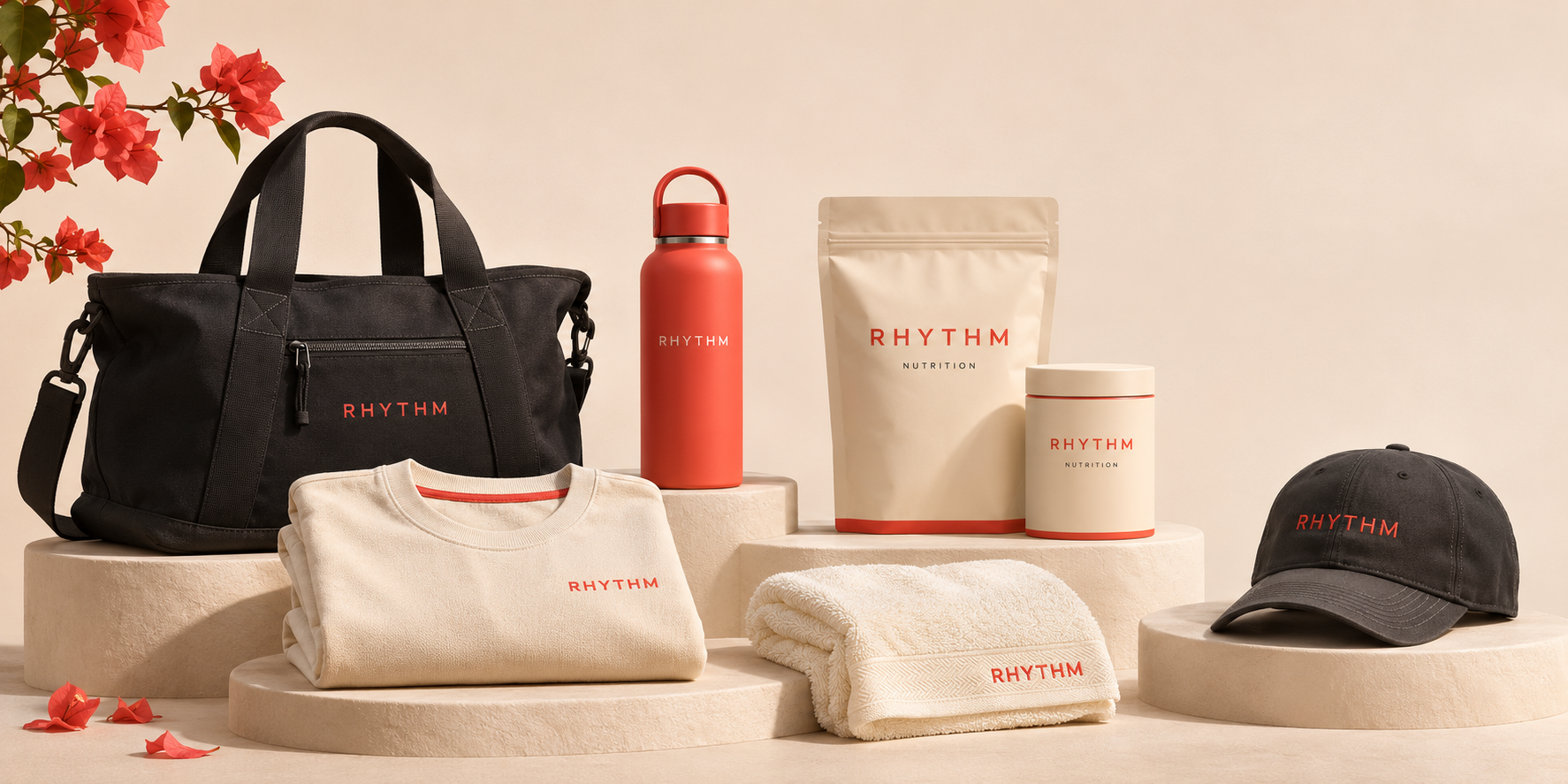
Offer a programme-matched home kit with quality checks, tracked delivery and clear returns.
Gate: paid retention + viable contributionUse pre-orders and small drops. Prove sizing, returns and full delivered economics.
Gate: paid pre-orders + return economicsQualify suppliers, licences, ingredients, labels, batch tests and recall traceability before launch.
Gate: qualified partners + repeat demandSolve an observed member need.
Include delivery, returns, testing and working capital.
Verify suppliers, fulfilment and product-specific compliance.
Cap pilot investment after the core service meets its gates.
Nutrition categories require product-specific review against applicable FSSAI standards. No health benefit, dosage recommendation or regulatory clearance is asserted here.
07 / EVIDENCE, OWNERSHIP & Q&A
Separate case facts, proposed assumptions and evidence still needed.
Ensemble: 64 micro-studios in 11 cities. Valhalla: 16 premium flagships with recovery and community capabilities.
Site capacity, contracts and current economics need validation.
Ensemble: local execution. Valhalla: programme and quality. JV: pricing, contracts, customer remedies and capital.
Test paid conversion, 90-day renewal, fulfilment and incremental contribution after displaced sales.
JV means the shared RHYTHM business. Its ₹7 crore equity budget covers the ₹4.82 crore base cash gap plus ₹2.18 crore contingency. Releases: ₹3 crore at M1, ₹2.5 crore at M7 and ₹1.5 crore at M15. Operators and the proposed Elite pilot need separate funding.
Its proposed contribution is a partnership-specific delivery system: a portable training block, bounded rescue-session choices and a Valhalla master-coach circuit across Ensemble pods. These are hypotheses about better execution, not claims that coaching or hybrid access are industry-first.
The revised model explicitly budgets higher operator receipts, progression reviews, programme assurance, technology and support. Contribution precedes acquisition and central overhead. It is not a 23% net-profit claim.
The standard Pod and Hub scenarios reach monthly operating break-even in month 9, within 18 months. Conversion cash recovery takes 24 and 26 months. These are different metrics. Network operator funding is separately shown using actual rollout and membership assumptions.
The earlier ₹8/14/22 crore central allowances were replaced by a component budget of ₹4.8/6.4/8 crore. Delivery coaching, reviews, support and programme QA now sit in direct costs. This is a revised organisational design requiring validation, not a demonstrated efficiency gain.
Stop new conversions, investigate affected cohorts and resize the plan. Use the scenario panel to compare funding requirements. The ₹7 crore JV funding budget does not fund every downside.